Best Scaffolding Systems for Coastal Construction Projects in Gold Coast
For those who have spent any time watching the waves at either Burleigh Heads or Broadbeach, it’s clear that the Gold Coast lifestyle is comprised of that wonderful salty sea breeze. However, what provides most people with a refreshing feeling can have devastating effects on the construction industry in terms of providing an undesirable working environment. The temperature and high humidity caused by salt in the air and severe coastal winds create an environment that not only creates discomfort but also has the potential to be extremely abrasive to building materials. If incorrect scaffolding is selected for a coastal renovation or a high-rise project, then rusting as a result of salt and/or moisture will not only be present; it will also diminish the structural integrity of your entire access system. If you are either a local builder or an individual planning a coastal renovation or upgrade, the first step toward a successful and safe project is to understand what scaffolding is going to perform well in GC conditions.
Unique Environmental Stressors Confront Building on the Gold Coast. Coastal environments (particularly within 5 km of the water) are classified as high-corrosion zones by construction industry safety standards. These environments have three primary environmental stressors:
Salt Spray – Increases the rate of corrosion through the accelerated oxidation of metals as a result of the presence of sodium chloride in seawater.
Wind Loading – As a result of the high-velocity winds common to coastal locations, scaffolding needs to be engineered and designed with greater stability than in non-coastal areas to properly withstand the wind loads exerted by the wind.
Shifting Terrain – Sandy soils often require the use of special base plates and soleboards to help prevent soil subsidence.
“Salt-laden air can increase the rate of oxidation or corrosion of materials above what the materials would experience under normal conditions. To prolong the life of a structure, weekly fresh water rinsing is recommended.” — Safety Insights on Coastal Access.
Top Scaffolding Systems for the Gold Coast
Three primary systems are present in the local market to address this issue. Each of these has its own unique strengths, which will depend on how large a project you are doing.
1. Aluminium Scaffolding (The Coast’s Champion):
The “Gold Standard” in aluminium for all types of coastal projects due to its ability to form a natural oxide barrier that provides exceptional protection from saltwater corrosion as opposed to non-treated steel.
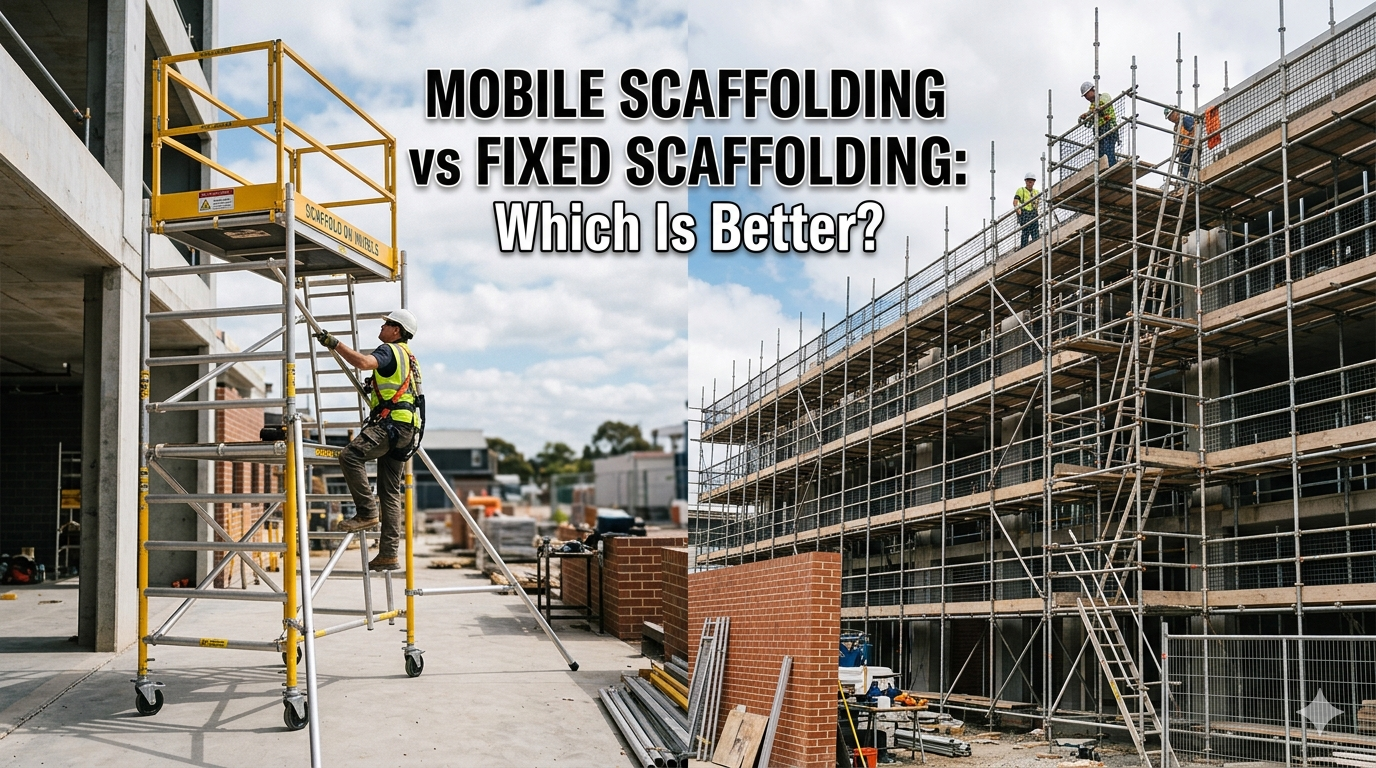
Advantages: Lightweight, does not rust, and assembles in the fastest possible time.
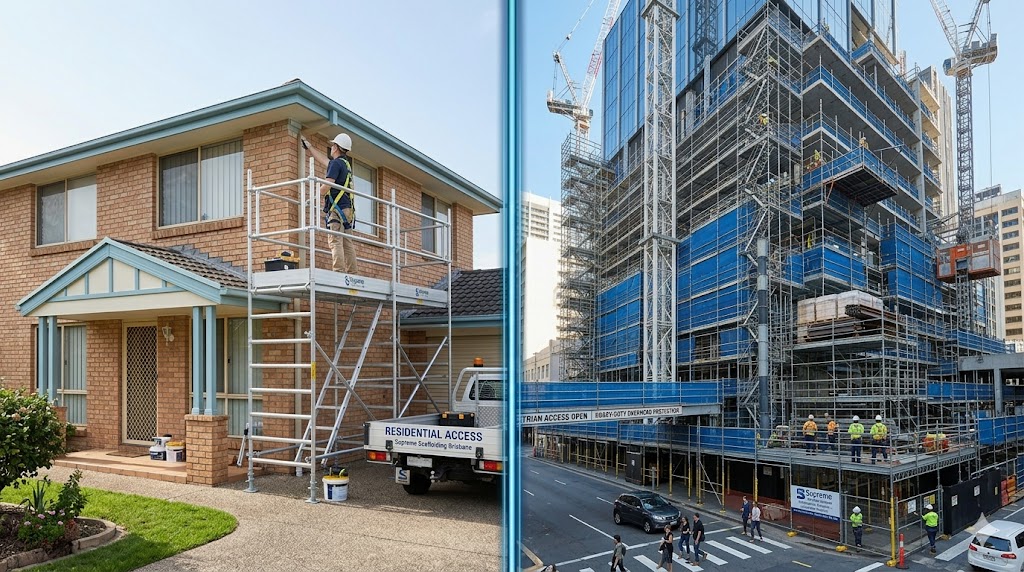
Most Suitable: Residential renovations, painting, and light to medium tradesman work.
2. Hot-Dipped Galvanised Steel Kwikstage Scaffolding (The Heavyweight)
For heavyweight loads, such as placing bricks, blocks or multiple workers, steel is absolutely the required material. However, in Coastal Cities such as the Gold Coast, it is critical that the steel is Hot-Dipped Galvanised as the Hot-Dipped Galvanisation process applies a zinc coating over the surface of the steel, providing a sacrificial layer to protect the underlying steel from the salt air.
Advantages: Can support high weight loads and is incredibly stable.
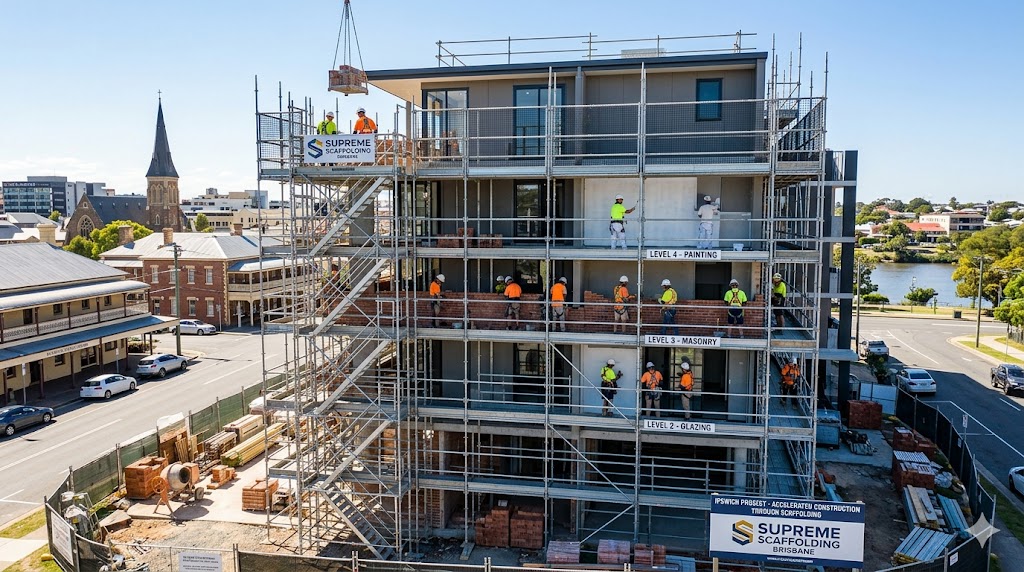
Most Suitable: New-builds, brickwork and large scale commercial construction.
3. Mobile Tower Systems:
Ideal for maintenance tasks where access along a building’s external wall is required; therefore, as almost all mobile towers on the Gold Coast are constructed of aluminium, the plastic wheels and locking mechanisms do not seize due to time being exposed to salt crusting.
Comparison Table: Aluminium vs. Steel Scaffolding
Feature
Aluminium Scaffolding
Galvanised Steel (Kwikstage)
Corrosion Resistance
Excellent (Naturally resistant)
Good (Required Hot-Dip Galvanising)
Weight
Lightweight (Easy manual handling)
Heavy (Required more labour/machinery)
Load Capacity
Light to Medium Duty
Heavy Duty
Best Use Case
Facade work, Painting, Cleaning
Masonry, Structural, High-rise
Assembly Speed
Very Fast
Moderate
Maintenance
Low (Weekly rinsing recommended)
Moderate (Inspect for zinc damage)
Key Facts for Gold Coast Builders
Here are some true statements about hiring your next set of builder’s plank and pole equipment to ensure compliance with WorkSafe QLD regulations:
Wind Regions: Most of the Gold Coast will fall under “Wind Region B”, but structures located north of Bundaberg fall within “Wind Region C” (Cyclone affected areas). Coastal scaffolds should also be tied off to the building at a greater frequency than inland scaffolds due to wind gusts.
Ground Stability: Due to the coastal soil being predominantly sandy, the Scaffolding Code of Practice 2021 stipulates that the principal contractor shall provide the following information in written form prior to erection, where the ground bearing capacity meets or exceeds that of the supporting structure.
Accessibility Standards: For all perimeter scaffolds more than 8 metres high, there is now a requirement for 2 methods of access/exit, one of which must provide emergency stretcher access capability.
Maintenance Tips for Longevity
Any system requires regular maintenance, particularly when located 50 metres from the ocean.
Weekly Fresh Water Rins: Ensure your aluminium towers are rinsed weekly to remove any salt build up (once the water is evaporated).
Moving Parts Lubrication: Castor wheels on mobile towers should be frequently lubricated. The “wedge” sets on Kwikstage frames should also be regularly lubricated.
Daily Inspections: Check all frames for signs of “salt pitting” or deterioration of hardware immediately after high winds or storms.
Conclusion
Constructing on our scenic coastline is a privilege; however, it is essential to take responsibility and use appropriate equipment. Choosing either lightweight aluminium for agility or galvanised steel for strength will always test your capabilities against the environment. Always provide your workers with safe access to the worksite by using sound materials; ensure that the supplier fully understands the requirements associated with mild Pacific winds when designing their scaffolding.
Supreme Scaffolding Brisbane will provide professional, safety-based solutions built to meet the tailored requirements of the unique conditions present in South East Queensland. Their staff are qualified, and they provide high-quality scaffolding systems to help complete your project as planned while keeping employees working in a safe environment. Supreme Scaffolding Brisbane is the preferred partner of choice to provide all you need for coastal excellence, from custom design to seamless installation.
FAQs
Does the salt air really ruin scaffolding that quickly?
Yeah, if you are using scaffolding made of basic and untreated steel close to the ocean, you will get surface rust within just a couple of weeks. The Gold Coast is classified as a “high-corrosive” area and salt acts as an electrolyte which promotes rust formation and causes it to occur more rapidly than in other areas. That’s why we recommend using either aluminium or hot-dipped galvanised steel, as both of these materials have protective coatings that resist “salty” effects for a longer period of time than less expensive options.
What happens when those big coastal wind gusts hit?
At both Surfers Paradise and Coolangatta the wind can be quite strong. Scaffolding can act as a very large sail, especially if you have safety netting or “shade-cloth” attached to it. Because of this, coastal scaffolds should be tied (attached to the actual building) more frequently than scaffolds constructed inland. In addition, using perforated mesh instead of solid tarps allows the wind to move through the scaffolds rather than pushing against them.
Do I need to wash the scaffolding?
It may seem absurd to “wash” a construction site, but if you rinse your construction site with fresh water at least once every seven days, your equipment will typically last twice as long in coastal areas. By rinsing off the salt crystals, you can also stop them from corroding the protective zinc coating or oxide layer on your steel and aluminium building materials. This is a very minor maintenance activity, but it will save you a tremendous amount of time (and money) in the years to come.
Is it more expensive to hire scaffolding for the Gold Coast?
Because of the requirement for specialised materials (aluminium or galvanised) and the additional tie-ins required due to winds, your initial quotation will be higher than a basic inland quote. However, this will ultimately be significantly less expensive than having to pay for damage to your equipment, or worse, discovering that a structural failure had occurred due to the corrosion of your joints due to salt.