Mobile Scaffolding vs Fixed Scaffolding: Which Is Better?
Standing at the base of something tall that you’re trying to renovate can be a very daunting task, especially if you don’t have a way to get to the top without using a shaky ladder. There is a lot more involved in selecting the right type of support for your project than just choosing Mobile Scaffolding vs Fixed Scaffolding: They each have their own advantages; whether it’s determining where you’re going to be working from and whether or not you will be able to move around or if you’ll be staying in that same position for a month. We’re going to explore the important aspects of both these different types of temporary working platforms so you can properly determine which one will work best for you and your new project.
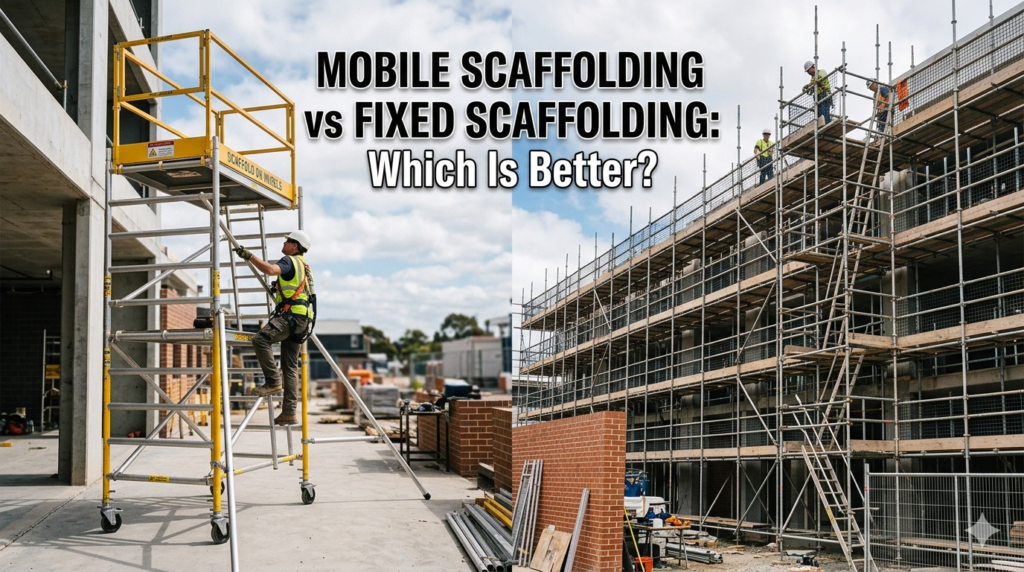
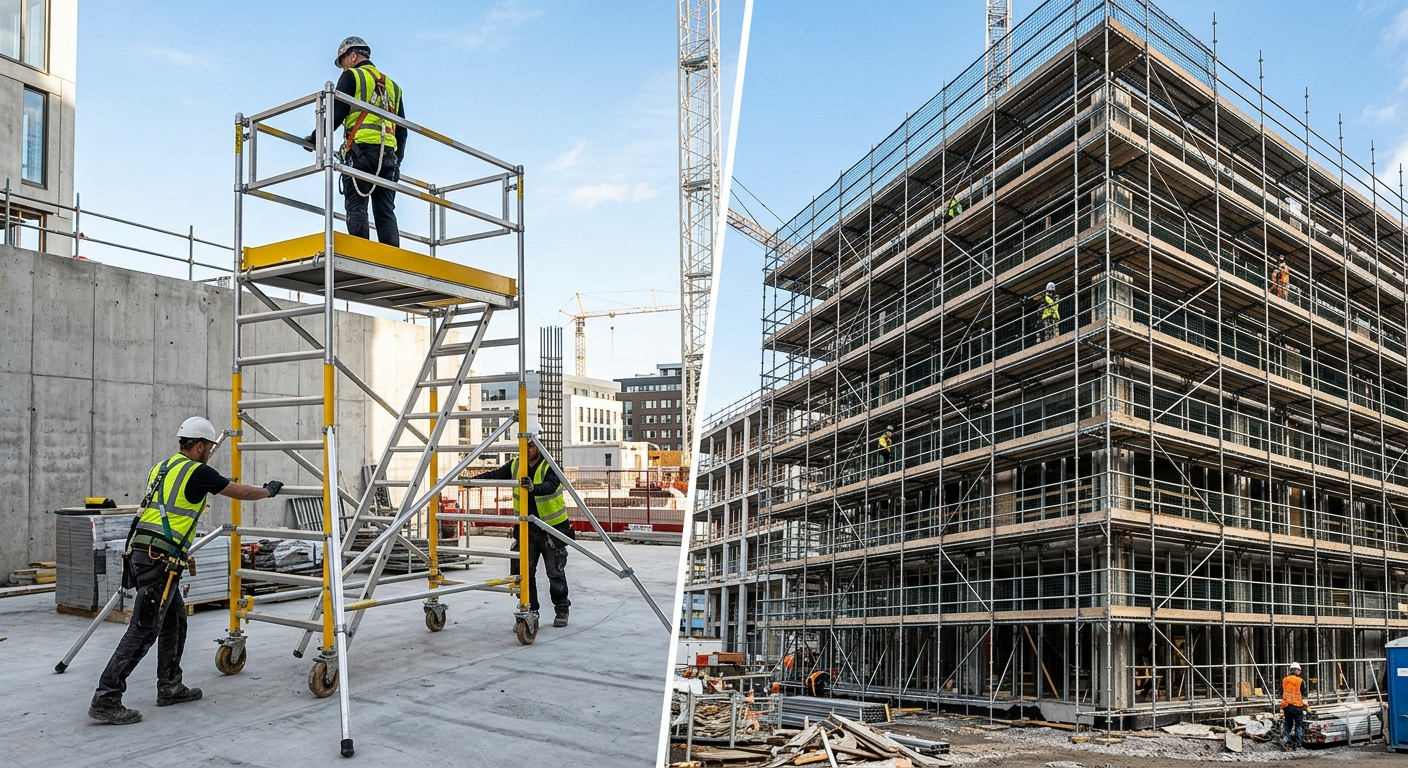
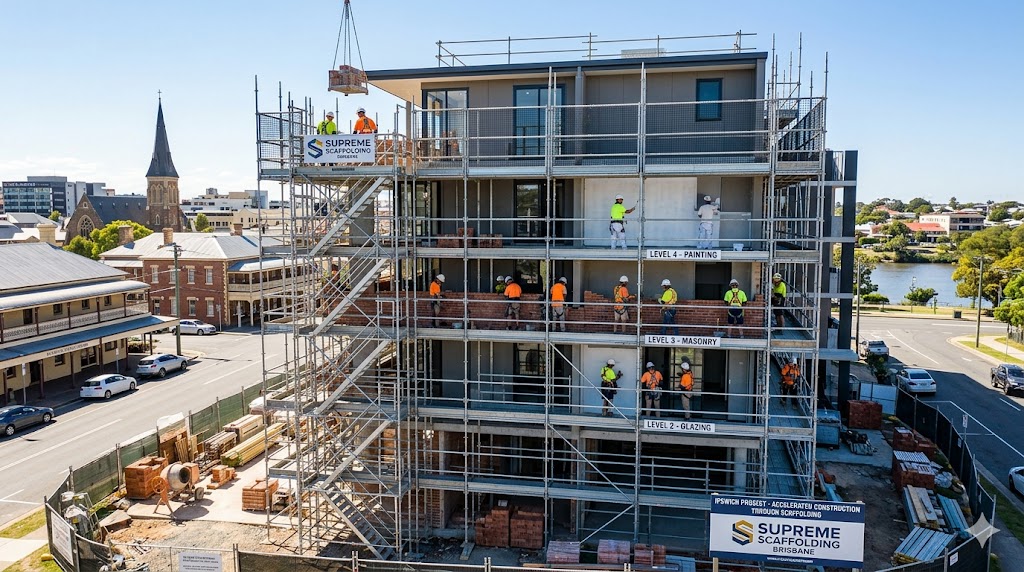
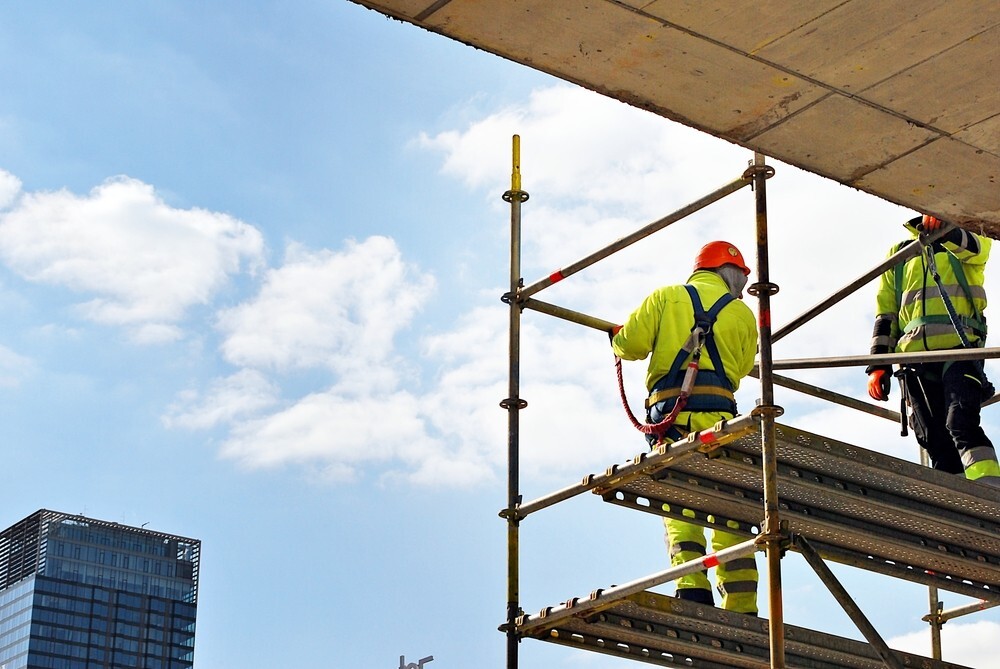
The traditional type of scaffolding that you would typically see around the sides of very tall commercial in-progress structures or a house being built is known as Fixed Scaffolding or Independent Scaffolding. Fixed scaffolds (and independent scaffolds) are made up of vertical composite pole structures anchored directly to the building substrate (the ground level). From the base of the building (ground level), vertical composite scaffolding pole structures go up the side of the building and then expand out horizontally to form a working shelf (the ledger) out of composite planks attached to the vertical pole structure. Overall, it appears as if many of these large sections are hugging the building and creating one large stable surface to work from during the duration of the project.
Why Go Fixed?
Heavy Loads: If you’re hauling many pallets of bricks and large mortar, or have a small team of up to 5 people, then fixed scaffolding is your best option as it is specifically designed to support heavy loads and will not buckle as a mobile tower would do.
Excellent Stability: The only sway in fixed scaffolding comes primarily from being anchored to the actual building structure. Therefore, there is a lot less sway when working from higher elevations where there is a chance that the wind could be an issue, and it makes working at extreme heights much safer.
Large Work Area: Fixed scaffold systems provide continuous working platforms from one end of the job site to the other without the workers needing to come down off the platform or needing to move their equipment.
The Agile Alternative: Mobile Scaffolding
Mobile scaffolds also referred to as rolling towers, are free-standing multi-tiered scaffold assemblies that can be moved easily because they are mounted on heavy-duty wheels or casters. They are primarily constructed from lightweight aluminium, which allows for easy placement and movement of materials and equipment on them.
Why Go Mobile?
Efficient Use in Small Applications: For example, completing a section of the ceiling and then rolling the scaffold to another location within seconds makes using a mobile scaffold ideal for installing lights or doing minor gutter repair work.
Lower Costs Overall: Mobile scaffolding is typically less expensive to rent than traditional scaffolding, but they are also much quicker to assemble and requires fewer people to set up, thus saving significant amounts of money on labour costs.
Ability to Use in Compact Areas: Rolling scaffold systems are very versatile in that they have the ability to be used in areas that are too small for large amounts of structural scaffolding, such as inside tight buildings or between narrow alleyways.
Making the Comparison: Side by Side
Feature
Fixed Scaffolding
Mobile Scaffolding
Height
Can go virtually unlimited heights
Best kept to lower or medium heights
Mobility
Zero. Once it is up, it is there
High. Rolls easily on flat surfaces
Terrain
Can be built on uneven ground
Required a flat, solid surface
Duration
Ideal for months of work
Perfect for quick, daily tasks
Which Is Better for You?
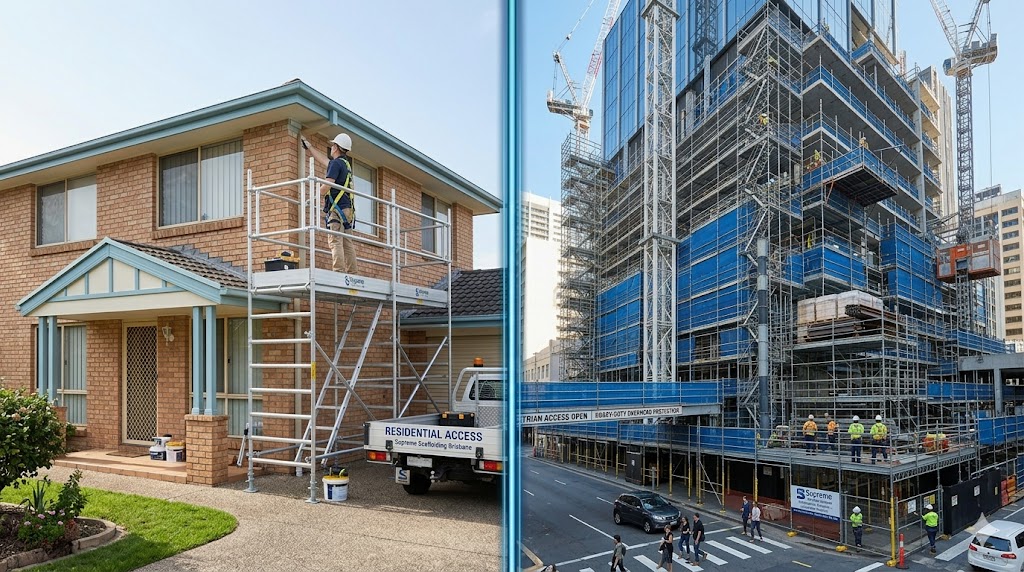
It all depends upon the situation; ask yourself if you are working up or down (horizontal vs. vertical) for the project. If you only have one chimney or a little patch of wall then go portable. If you have to render the whole house (2 storeys) then go fixed.
Also think about your ground conditions; mobile towers are great on concrete or flat pavers but can be a challenge and/or safety risk on soft mud or sloping ground. A fixed scaffold can be levelled using baseplates to give you a level working area in nearly all cases.
Conclusion
When you are a do-it-yourself weekend handyman or an experienced contractor, your choice of both systems will dictate the success or failure of your workday. The key is to find the best balance between the essential requirement for heavy-duty strength vs. the benefit of fast mobility.
When the time comes to commence your project, it is critical to have equipment that can be relied upon to perform. If you’re located in the southeast corner of Queensland, be sure to speak to the professionals at Supreme Scaffolding Brisbane who will advise you on the highest quality equipment and provide the proper advice in order to ensure your site remains safe and operates efficiently.
It shouldn’t be a nightmare to choose the system you require, as all you’ve got to do is select one that will allow you to concentrate on doing the job itself!
FAQs
Can I just use a mobile tower for everything to save money?
It’s often nice to use mobile towers; however, whether or not they will be appropriate for what you’re doing depends on how much “footprint” your work has taken up. For instance, painting a house will require more time spent climbing down from where the mobile tower was but less time actually doing the painting itself than if you were using fixed scaffolding, since you can walk along the length of the wall when using fixed scaffolding. In addition, there are rules regarding height to base ratios for mobile towers to prevent them from tipping over; as a result, if you go above a certain height without increasing the base of the mobile tower, it will become wobbly and tip over.
I’m working on a bit of a slope. Can I still use mobile scaffolding?
A short answer to this question is ‘No’. Mobile scaffolding can only be used on a flat, solid and properly level surface (e.g., concrete and asphalt). Because they are on wheels, they may be made unstable or may roll with even the slightest incline. Therefore, if your ground is rough, uneven, sloped or grassy, your only option would be to use fixed scaffolding because you would then have the ability to adjust each scaffolding leg to create a level platform.
Do I need a license to set these up myself?
Generally speaking, if you are building or moving basic scaffolding that a person or object could fall from and the height of the scaffold is less than 4 metres, then a high risk work licence is not required to do so anywhere including Queensland. Beyond that (4m), a certified scaffolder must be used under the law. Regardless of height, we always recommend using a professional to assess your scaffolding prior to starting work as it is always best to err on the side of safety.
How much weight can I actually put on a mobile tower?
Aluminium mobile towers have a relatively low “load rating” compared to fixed steel scaffold systems due to their weight. Mobile towers are suitable for supporting a person and their tools, and perhaps a bucket of paint. However, if you intend to stack heavy materials such as bricks, stones, or have a number of employees at the same level, a heavy-duty fixed steel scaffold system will be needed.