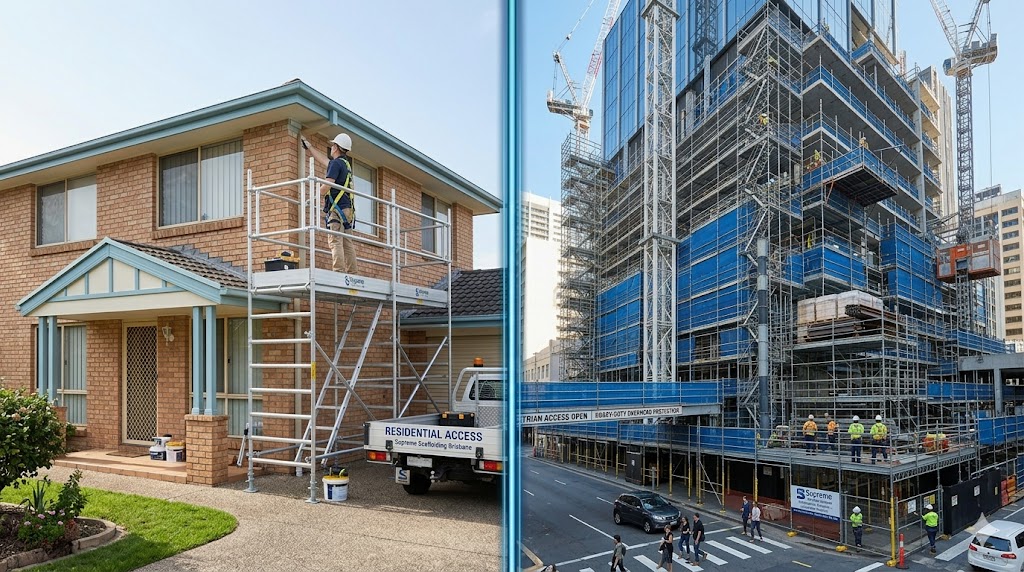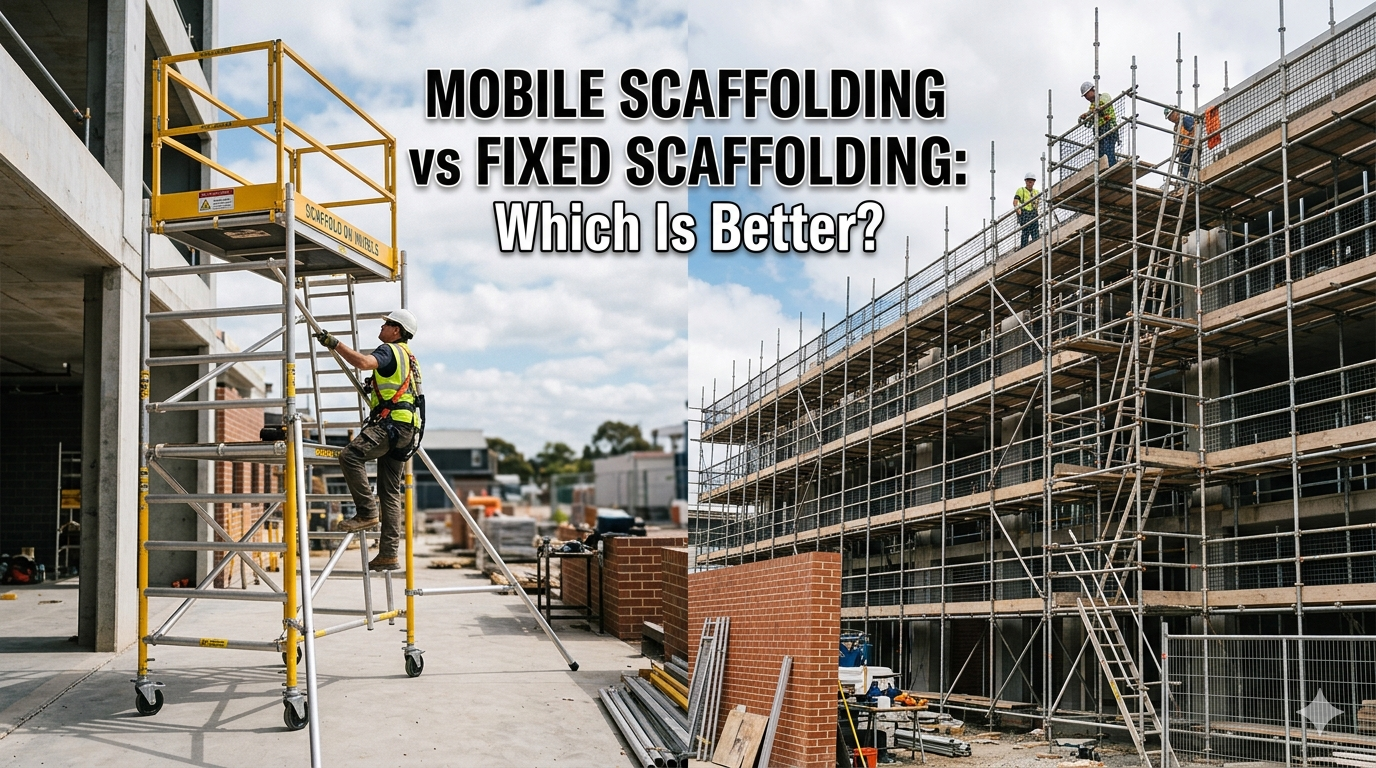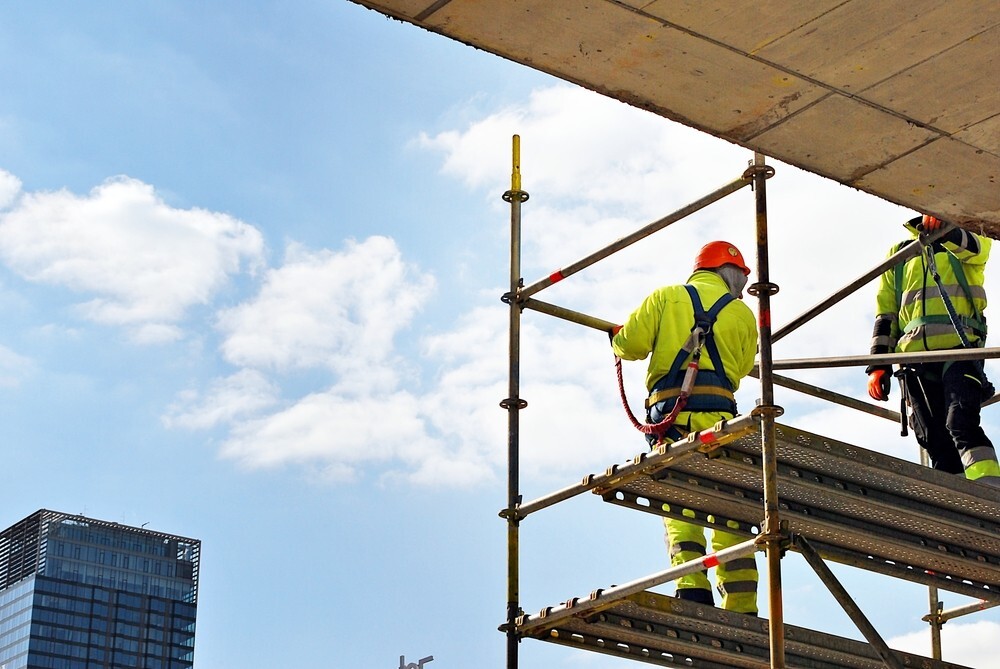
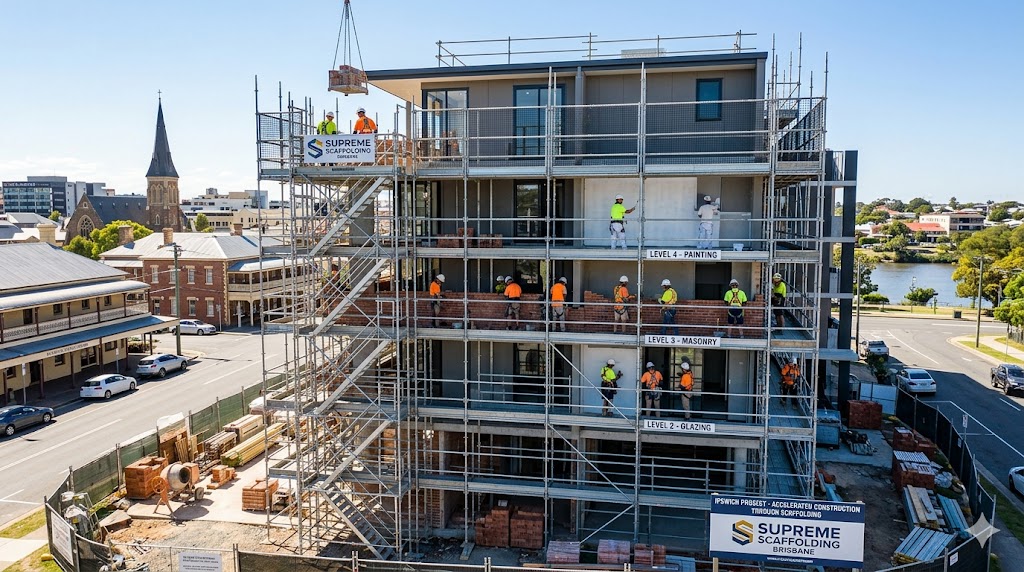
Wherever you are—whether you are wandering around Ipswich with its historic streets or checking out construction in the Nicholas Street area—all you can see is construction. For anyone who has been involved in a build, the middle of the construction period (when the structure is built but the elements are not yet finished) can seem like an eternity. We’ve all probably been there, constantly looking at our clock and budget, trying to figure out how to expedite our team’s progress while not compromising safety. The answer is in using strategic scaffolding. It is more than just a bunch of metal poles and wood planks; it is the engine that ultimately powers a project to completion. When you have a rapidly expanding centre like Ipswich, having the right scaffolding means the difference between being on schedule and being stuck in the mud.
Why Scaffolding is the “Work Highway” of Your Site
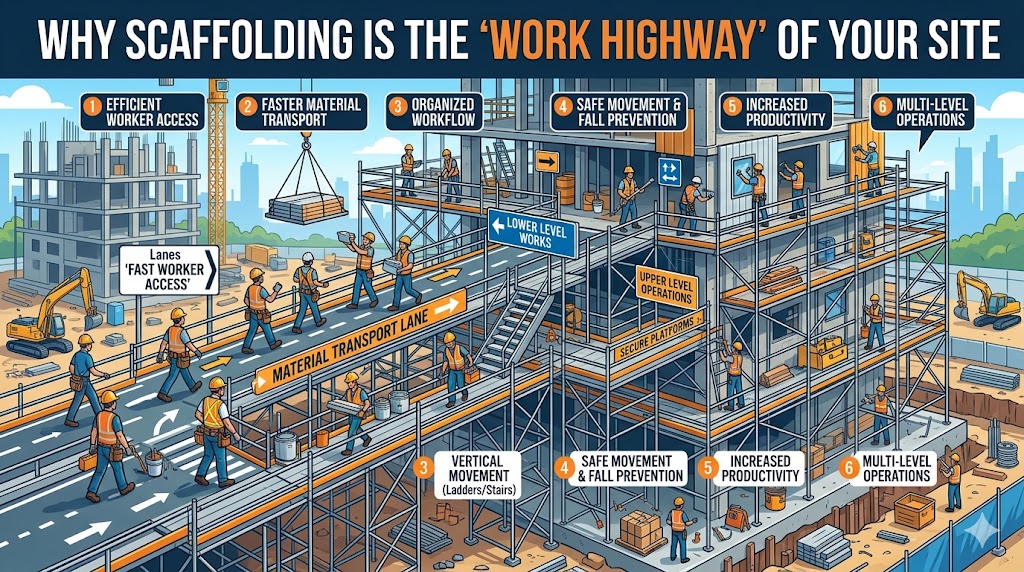
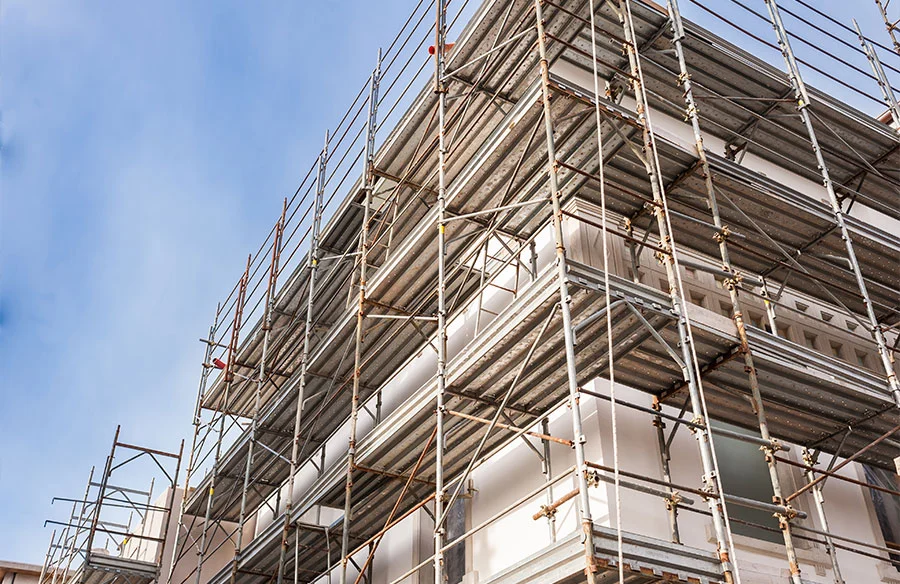
The construction industry relies heavily upon time, and reputation is also vital. Here in Ipswich, there has been a surge of activity for renovations of both residential homes and commercial buildings, so developing ways to perform construction tasks more efficiently is paramount. Scaffolding is an effective tool as it serves as a “work highway,” allowing your employees to have access to a stable and multi-level working platform which provides them the ability to be productive during the construction process.
1. Eliminating the “Ladder Lag”
Changing a light bulb is a straightforward job – but it’s incredibly slow when using a ladder. When a worker climbs down from using a ladder, has to take the ladder and move it three feet laterally, and then go back up to continue working, the time it takes them each time is very billable.
- Scaffolding gives workers “area access.” When using scaffolding, a painter or brick mason can walk the length of a scaffold and complete many square feet of work on the building’s exterior without ever needing to come down.
- Lastly, a tired worker moves more slowly than a well-rested worker. Having a flat, stable surface to work from greatly reduces each worker’s physical burden while also increasing the time they will remain productive working in one location.
2. Parallel Processing: Multiple Trades, One Structure
The ability to have different trades work together simultaneously is one of the main advantages of having scaffolding set up by professionals. For example, in an average Ipswich residential construction, you would see:
- Bricklayers at the top elevation of the scaffold are finishing off the exterior wall brickwork.
- Window installers at the middle elevation of the scaffold are installing windows into the brickwork.
- Rendering trades or painters follow closely behind the window installers.
If scaffolds were not available, these trades would likely trip over one another and have to wait for one another to finish before starting. Scaffolding is designed in such a way that they can create “work zones” and allow all trades to continue working in parallel.
Safety as a Speed Multiplier
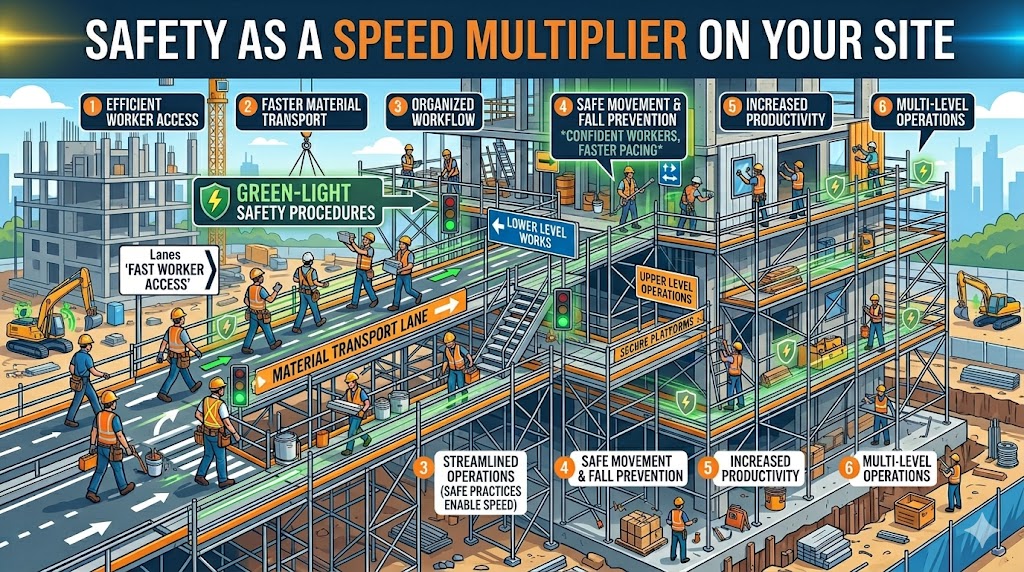
It might feel somewhat counterintuitive but the stricter your safety measures are, the quicker your project will progress. When workers feel 100% secure, they will work faster. Workers aren’t spending time “hugging the wall” or checking their footing every three seconds; instead, they focus on the task at hand.
Reducing Downtime and Incidents
In Queensland, there are very strict safety regulations for a reason: An “incident” on site not only causes injury to someone but also halts the entire project while an investigation is conducted, creating a lot of paperwork as a result. High-quality scaffold systems with integrated edge protection and void protection will help keep projects progressing by:
- Allowing work to continue regardless of the weather: Platforms will provide superior grip and stability to workers during the unpredictable rain in S.E. Queensland.
- Assisting with the staging of tools and materials used on site: Workers may store their tools and materials (i.e., heavy buckets of render or stacks of bricks) directly beside where they are working thus eliminating the “yo-yo” effect of running back and forth for supplies.
Local Expertise Matters: The Ipswich Context
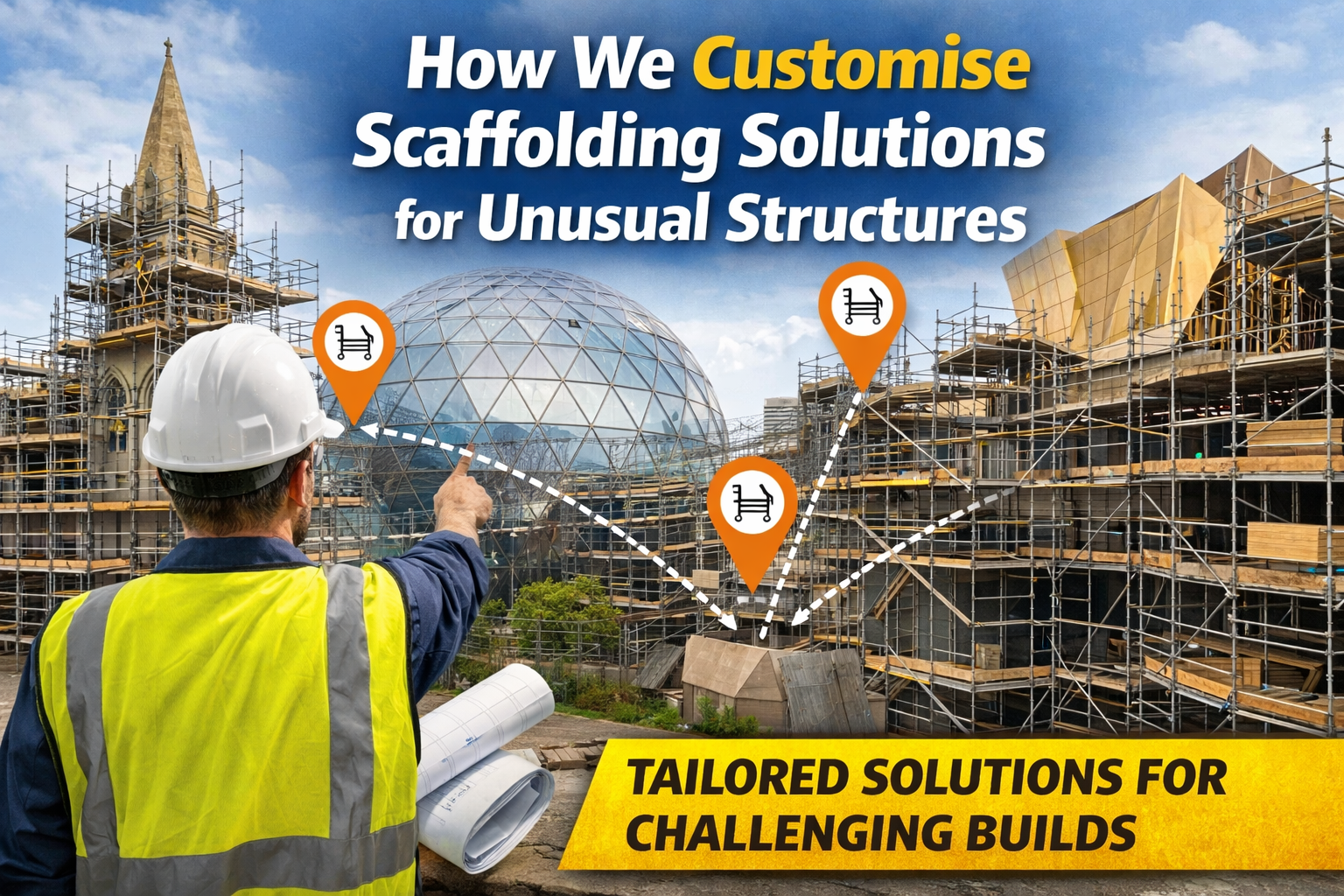
While Ipswich has both old “Queenslander” heritage and modern commercial property – both being a mix that has many different styles, it isn’t practical to use a “cookie cutter” style of scaffold. You require some type of scaffold system that will be able to work through ‘narrow side passages’, or wrap around/over a roof and gable end of a home built in the 1920’s without causing damage to the structure of the home.
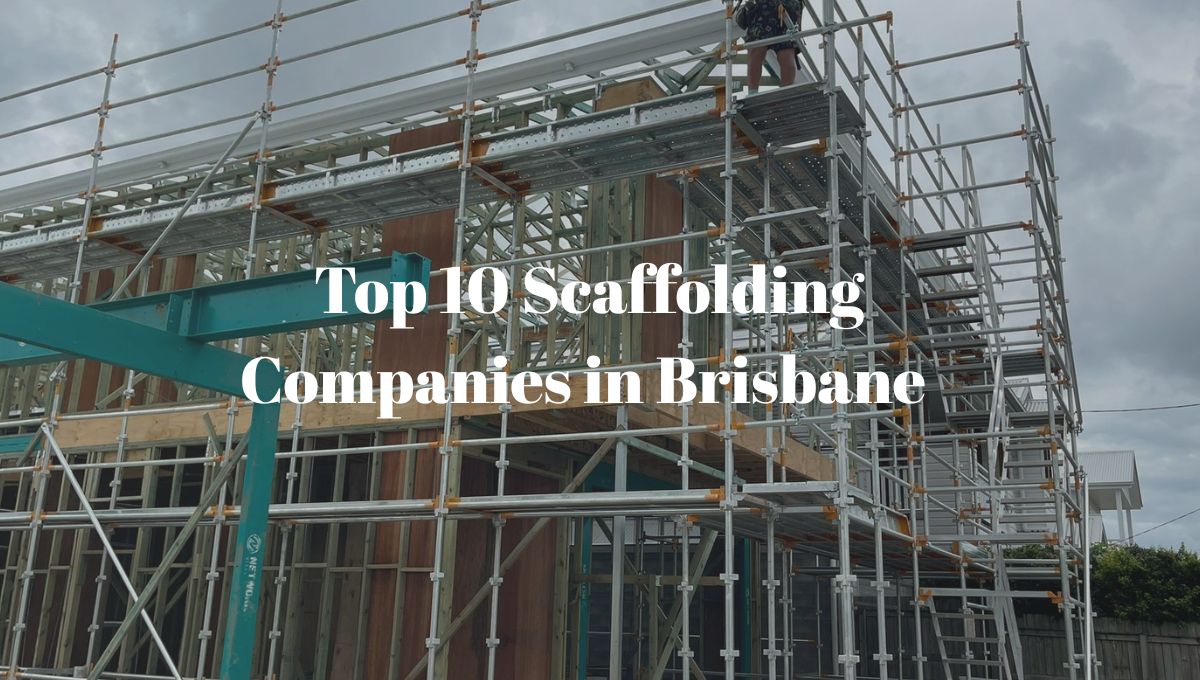
Lightweight & easily built/alum. towers (modular steel scaffold systems) have reduced erection/demolition time when compared to the older scaffold systems in place today… so any lightweight scaffold you build/will only be there while it’s adding value to the site, and will not be hanging around forever once the work has been completed.
Key Efficiency Features to Look For:
| Feature | Benefit for Speed |
| Mobile Scaffolds | Can be wheeled around the perimeter for quick tasks like guttering or painting. |
| Stair Towers | Faster and safer than internal ladders for moving personnel between floors |
| Loading Platforms | Allows cranes to drop materials directly onto the working level. |
Conclusion: Partnering for Success
At the end of the day, when you scaffold your project, you’re really investing in the time it takes for your project to be completed. Selecting a partner who knows the Ipswich area and values both speed and safety will help to ensure that your build is delivered on time. When looking for scaffolding, the quality of the support structure you use is critical to whether your high-rise commercial or delicate residential renovation will be delivered on time.
If you’re searching for reliable solutions that are specifically designed for your projects, look no further than Supreme Scaffolding Brisbane. We have an experienced team, as well as all the necessary materials, tools and equipment required to ensure your Ipswich project remains on track and compliant with building laws.
FAQs
Do I really need professional scaffolding for a one-story house?
When working on a single-story Queenslander home, using tall ladders or making a DIY trestle seems reasonable, but actually makes the project go slower than working off professional scaffolding.
Professional scaffolding provides a continuous walkable surface around the home allowing you to also work efficiently. Instead of continuously moving your ladder for two to three minutes to paint a section of gutter, you can walk the entire distance of the home from one side to the other with no interruption.
The scaffolding costs may seem initially more expensive than using ladders; however, the time it saves in labour (man-hours) generally covers the rental costs pretty quickly.
How long does it take to set up and take down?
This is a question like “how long is a piece of string”, but for a standard residential project in Ipswich, a professional crew can usually erect your scaffold within half a day to one day.
Again, dismantling is faster; however the site must be clear and level before the truck arrives. If we are able to arrive on site with nothing in our way, i.e., moving piles of bricks or trying to navigate parked cars, we can have you “work-ready” in record time!
Ipswich yards can be tight. Can you fit scaffolding in narrow side-passages?
We hear this question quite often, particularly when it comes to working with existing houses that are being renovated in older suburbs. The short answer is, yes. Modern day modular building systems are very similar to enormous Meccano (or Erector) sets. We can build standing feature walls that create a “slimline” tower or use cantilevered systems that hang over fences or garden beds without physically touching the structures. If there is at least a 700mm to 1m gap, we are usually able to create a safe, functional platform.
What happens if the weather turns bad? Does the scaffold stay put?
The most distinguishing feature of Ipswich is its propensity to experience severe thunderstorms unexpectedly during the summer afternoons. Therefore, we engineer our scaffolding systems to meet or exceed Queensland’s standard requirements; our scaffolding is bolted, braced, and weighted to resist high winds. If you have concerns about rain forcing us to stop working, we can provide either “containment mesh” or “shrink wrap” material to keep the inside (work area) of the project dry; as a result, your team will be able to continue working inside while it rains outside.